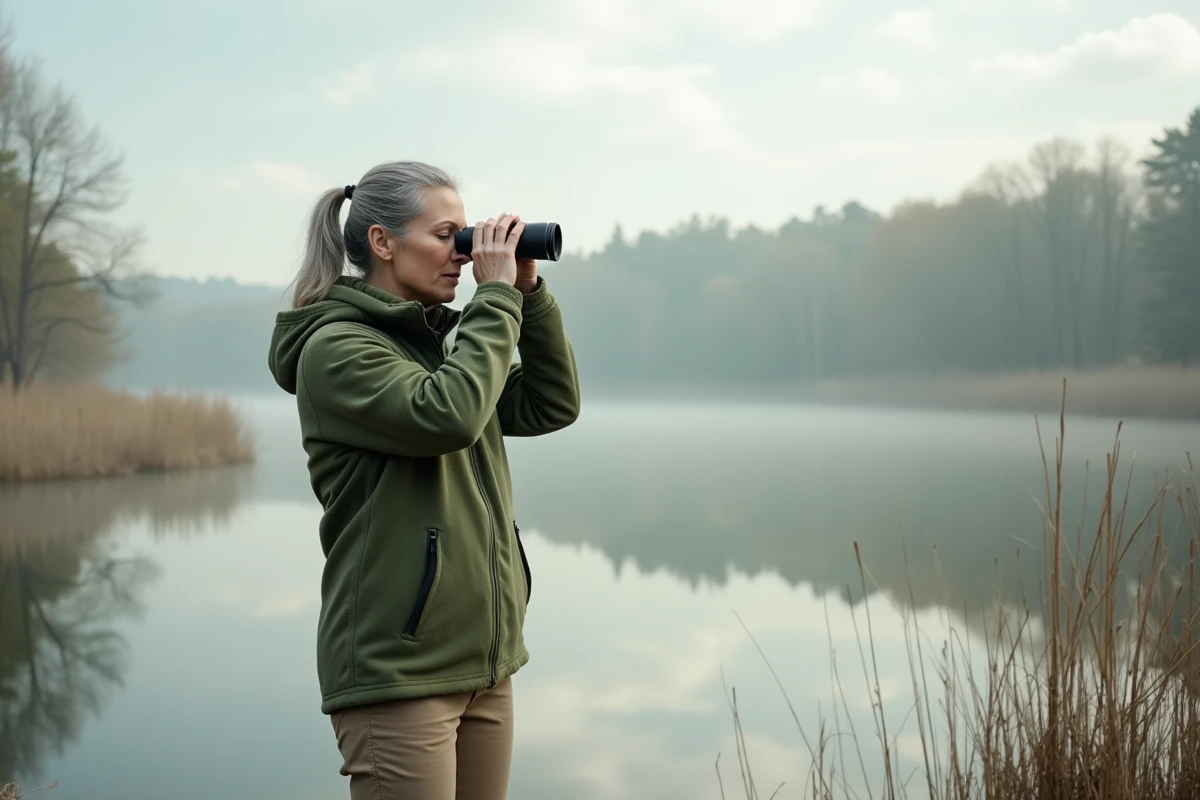
What species can one actually encounter around Lake Aiguebelette, and during which periods is observation most fruitful? The answer varies depending on the season, the type of habitat traversed, and access conditions to sensitive areas. This Savoie lake, protected by strict regulations regarding visitor access, offers a study ground where wetlands, reed beds, and riverside woodlands concentrate a diverse birdlife throughout the year.
Seasonality of birdwatching at Lake Aiguebelette
Most guides present spring as the only valid observation window. However, alpine wetland sites like Aiguebelette operate on a four-part ornithological cycle, each with its characteristic species.
| Season | Ornithological Phenomenon | Types of Observable Species | Potential Disturbance Level |
|---|---|---|---|
| Spring (March-May) | Pre-nuptial migration, nesting | Nesting passerines, migrating raptors | High (breeding in progress) |
| Summer (June-August) | Raising young, residency | Herons, grebes, molting ducks | Moderate |
| Autumn (Sept-Nov) | Post-nuptial migratory stopover | Shorebirds, migratory passerines | Low |
| Winter (Dec-Feb) | Wintering on water | Diving ducks, pochards, great cormorants | Low (active quiet zones) |
Autumn and winter remain underutilized by visitors. Yet, these are periods when wintering birds concentrate on the water, offering extended observations without the pressure of the high tourist season.
Participating in a birdwatching walk at Aiguebelette allows one to cover these different seasonal atmospheres with guidance adapted to the current conditions.
Sensitive Areas and Access Regulations around the Lake
Aiguebelette is not a lake with unrestricted access all around its perimeter. Several areas are subject to restrictions related to the protection of birdlife, especially during breeding periods and winter quietude. These limitations are governed by local decrees established by the community of communes of Lake Aiguebelette.
The recent trend at alpine wetland birdwatching sites is towards silent and marked observation devices. The goal is to channel visitor flows rather than multiply open viewpoints, which reduces disturbance to nesting birdlife.
In practical terms, this means that some paths near reed beds or mudflats may be temporarily closed. Fixed observatories, when they exist, replace direct access to the shores. This model, already visible at other alpine sites like the Herretang peat bogs in Chartreuse (educational trail, observatories, controlled access), is gradually becoming widespread.
What This Means for Visitors
- Birdwatching routes are not fixed: they vary according to current decrees and the season, making prior preparation essential
- Binoculars and spotting scopes become very useful, as the observation distances imposed by the marking often exceed the range of the naked eye
- Silence and slow progression become real technical constraints, not just a comfort suggestion
Habitats of Lake Aiguebelette and Associated Species
Lake Aiguebelette juxtaposes several types of environments within a restricted perimeter: open water, reed beds, wet woodlands, and riverside meadows. This mosaic of habitats explains the diversity of observable species, far beyond just water birds.
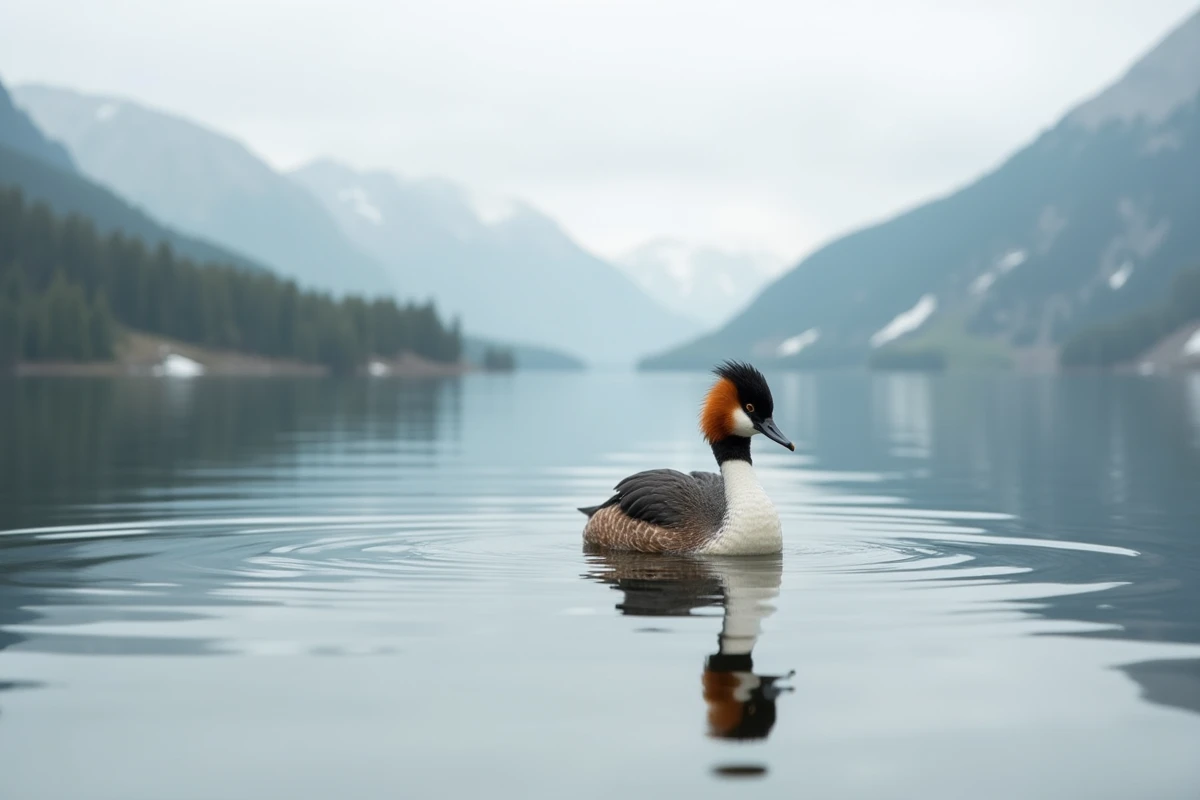
The reed beds shelter marsh passerines (reed warblers, sedge warblers) in spring, while wooded areas host woodpeckers, tits, and forest raptors year-round. On the water itself, great crested grebes and grey herons are regular sightings.
Reading the Landscape to Anticipate Observations
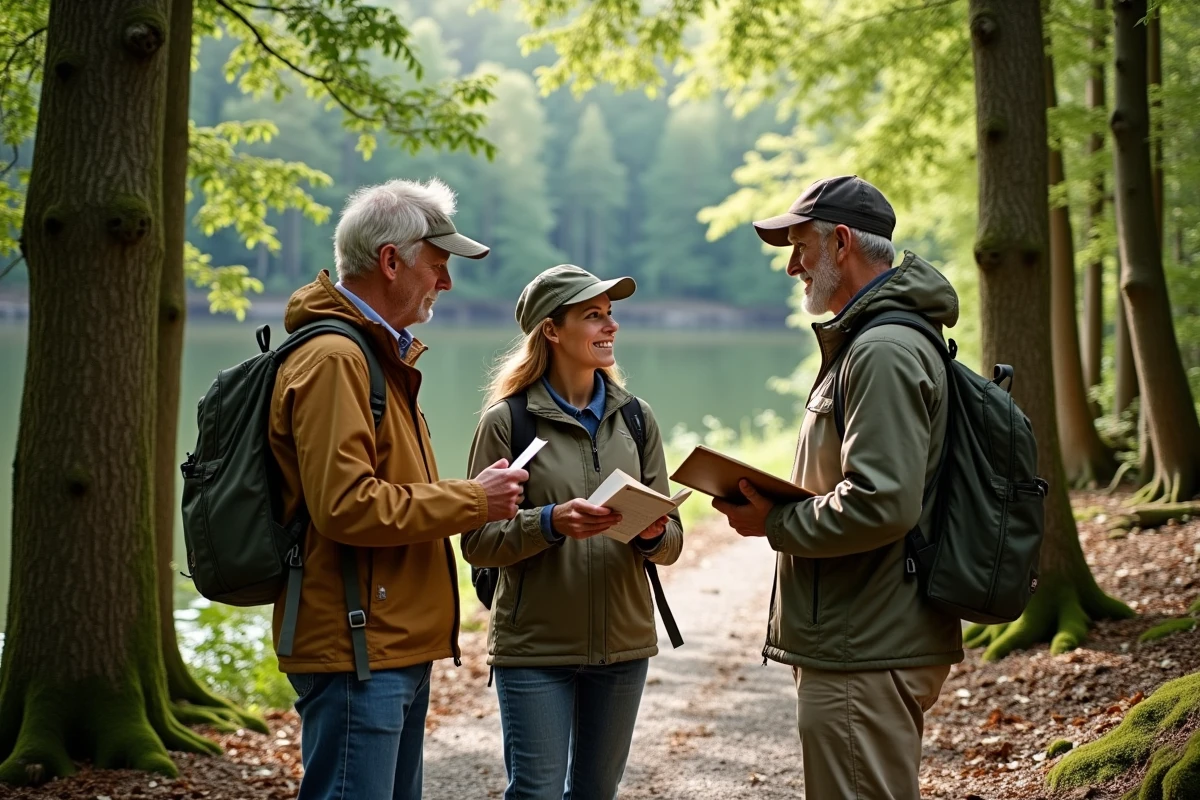
An observer who understands the logic of habitats becomes more effective. The borders between two environments (forest/reed bed edge, open water/emergent vegetation transition) are the most productive areas. It is here that the density of species per linear meter is highest, because birds find both cover, food, and lookout posts.
Nature observation is not about walking a long time. It is about stopping at the right place, facing the right habitat, at the right time. The first hours after sunrise and late afternoon remain the slots where vocal activity and movements are most pronounced.
Equipment and Approach for Effective Birdwatching Outings
The choice of equipment directly affects the quality of observation at a site like Aiguebelette, where the distances imposed by regulations make optics crucial.
- Binoculars with 8x or 10x magnification cover most situations in a lake environment
- A tripod-mounted spotting scope becomes useful for distant water birds, especially in winter when ducks congregate in the center of the lake
- A paper or digital identification guide focused on species from the Rhône-Alpes region avoids confusion between similar species
- Neutral-colored clothing and slow progression significantly reduce disturbance
The approach by listening always precedes the visual approach. In a wooded site or reed bed, most species are detected by song before being seen. Learning to recognize a few common songs (blackbird, great tit, chiffchaff) transforms a walk into a true inventory.
Aiguebelette remains a site where the quality of observation depends more on the visitor’s behavior than on the rarity of the species. Birds are present in all seasons. What makes the difference is the ability to position oneself correctly, respect distances, and give species time to reveal themselves.