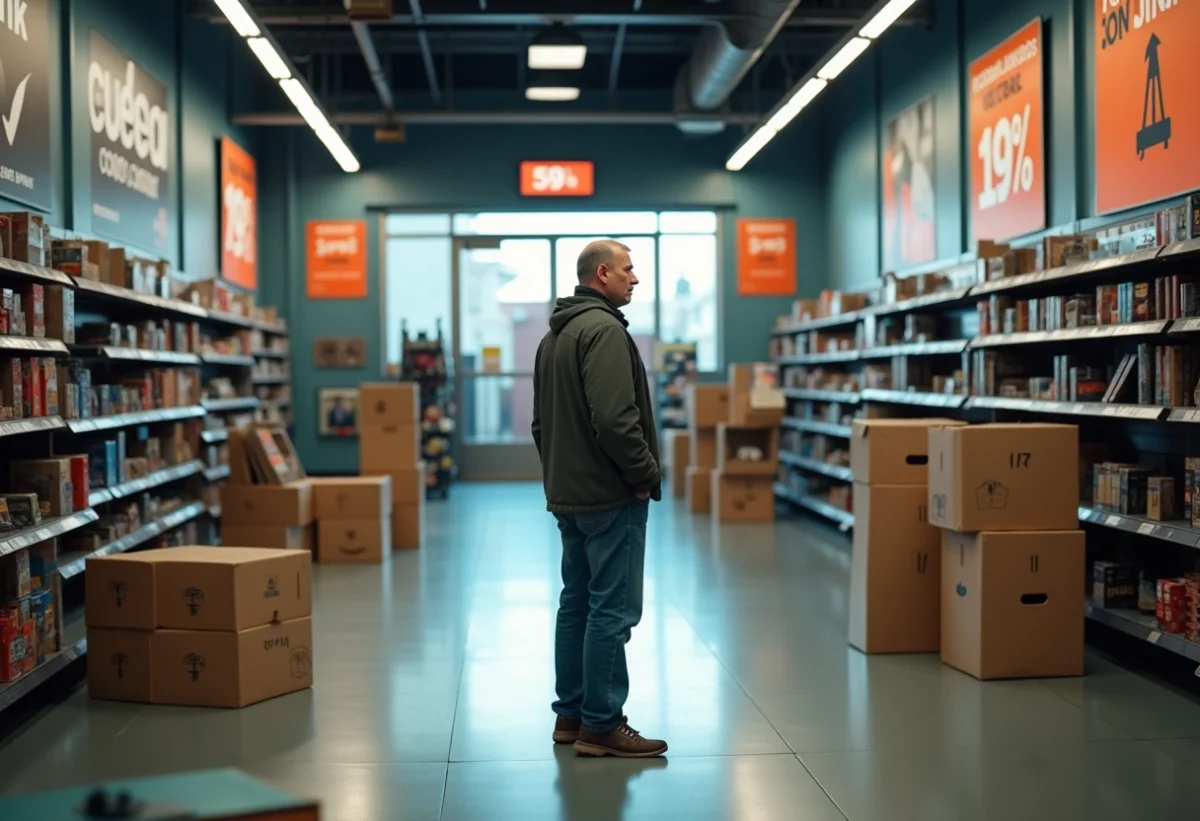
In the raw reality of numbers, the liquidation of a store is not just a simple line in the economic press. In Lomme, the sudden closure of Intersport left behind about thirty employees and a handful of local suppliers, all abruptly halted. Yet, some observers considered the store to be relatively stable, far from the image of a brand at the end of its rope. The decision hit the local economic players hard, who struggle to understand how such a scenario could unfold so quickly, while activity seemed to be holding steady.
What the liquidation of Intersport in Lomme reveals about the state of the sector
What happened in Lomme goes beyond anecdote. The sudden closure of the store shines a spotlight on the tremors in the sporting goods retail sector. In the background, the market is evolving through acquisitions and massive reorganizations. In April 2023, Intersport took control of Go Sport for 35 million euros, attempting to stabilize a neighbor plagued by legal proceedings. This acquisition helped prevent the extinction of a large part of the network: 72 stores saved, the majority of jobs maintained. However, behind this rescue, the group launched a much deeper operation involving store resales, renovations, concept overhauls, and high-profile liquidations. To shed light on this complex picture, the ins and outs of the Intersport liquidation in Lomme detail the choices made and their real impact on the sector.
The new strategy is clear: Intersport is readjusting its priorities. Here are the two main directions of this plan on the ground:
- 50 refurbished stores now incorporate the Intersport brand,
- while about thirty stores transition to Schiever.
At the same time, a massive modernization project is underway, backed by 140 to 150 million euros over the coming years: LED lighting, renewed furniture, redesigned spaces. With this program, the company aims to reduce its environmental impact while making the customer experience more attractive. Support from major partners like Al-Mana, Nike, or Puma helps facilitate the transformation in the face of intensified competition.
Behind the brand-new facade, the tension remains palpable. In the French market, the competition for market share compresses profitability and undermines stable employment. One figure sets the tone: during the acquisition, out of 1,574 affected employees, only 128 could be retained. And while the showcase in Paris is being reinvented, electric bikes are booming, now accounting for 10% of the group’s revenue. The sector is entering a new phase where every investment is scrutinized and every decision about the future carries heavy consequences.
What are the local stakes for employees, customers, and partners?
The closure of Intersport in Lomme does not just leave an empty space: it affects the economic and social fabric of the Lille metropolitan area. For employees, the shock is direct: relocation, retraining, or waiting become part of each of their paths. In some cases, solutions have been found elsewhere, such as in Lanester where twelve employees have bounced back. But most remain in uncertainty, suspended by the fate of upcoming reorganizations.
For customers, it’s a cornerstone of the neighborhood that disappears, with all that it implies: goodbye personalized advice, local offers, or support for school and sports associations. Of course, liquidation deals attract with their discounts, but once the curtain falls, there will be no more after-sales service, no more support for local clubs, which must urgently reorganize to source elsewhere.
Local suppliers and partners also feel the impact. Gradually, the closure reshuffles the cards of regional distribution networks, particularly for SMEs that benefited from the store’s regular orders. The local economy suffers the backlash, forced to find other outlets or reinvent its collaborations as some brands change hands or new formats establish themselves in Paris.

Short and long-term consequences: what are the prospects for sports distribution in the region?
The shutdown of Intersport in Lomme does not merely create a temporary void in the sports sector in Hauts-de-France. Immediately, teams find themselves at a crossroads, customers lose a reference point, and local subcontractors seek to adapt. At the same time, the modernization of the network is progressing behind the scenes: rapid transformation of former Go Sport stores, new commercial standards imposed, and an offensive to reduce carbon footprint.
In a region where the passion for sports withstands the economic climate, the disappearance of this retail outlet marks a turning point. Intersport, well established in the electric bike segment in France, is betting on innovation and local production, with centralized manufacturing in Loire-Atlantique. This adaptation aims to align with the expectations of a more mobile, more demanding clientele, in the face of declining foot traffic in traditional stores.
Over time, the sector is entering a phase of profound metamorphosis. Accelerated modernization, transfers of stores to new players, the opening of large concepts in Paris—all signal a new landscape for specialized distribution. New international alliances, the rise of strategic partners—all this accelerates the repositioning of major brands. The sporting North is thus preparing to see its map completely reshaped: proximity, innovation, and quality of service will become the battleground for the next competition. It remains to be seen who will get the best start on this new line, as other stores may soon face the same fate.