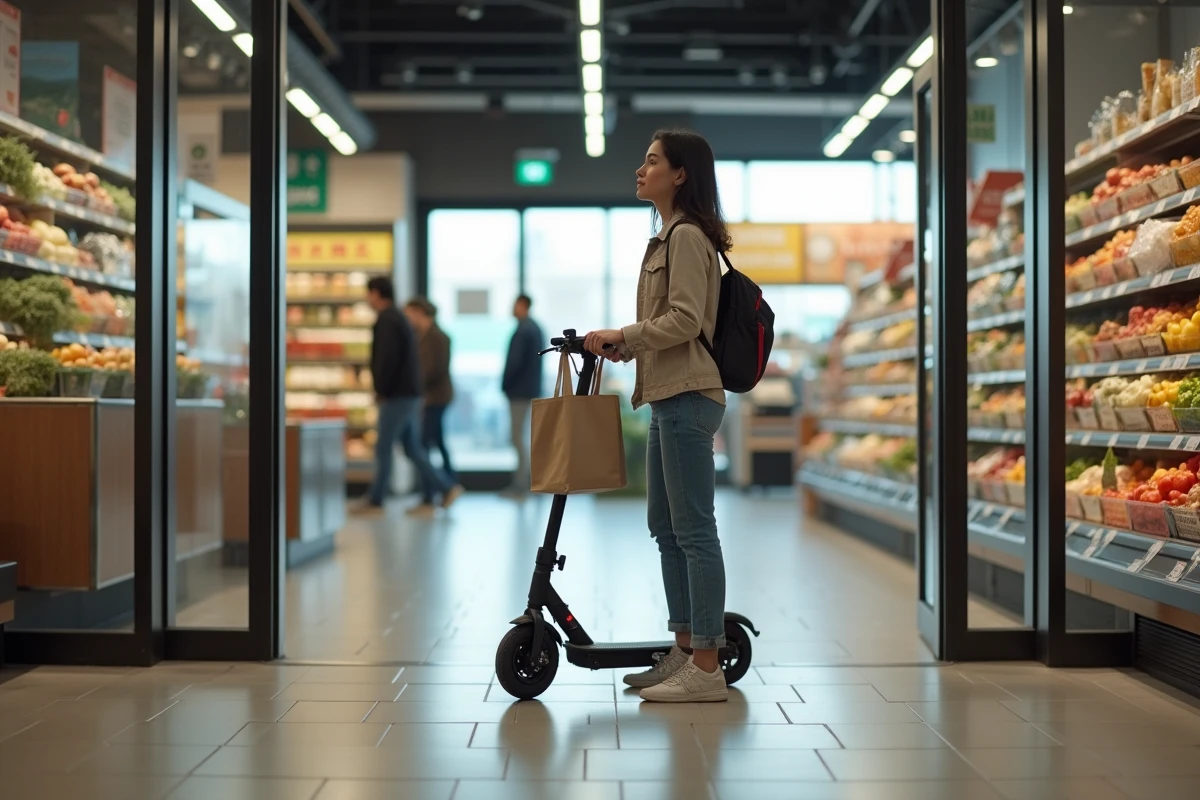
A regulation displayed on a door does not change the fact: the electric scooter fascinates, disturbs, or intrigues, but it disrupts the established order of shopping in stores. Between the comfort of flexible urban mobility and the caution of retailers, the landscape remains fluid. However, one detail often escapes discussion: there is no national text that clearly decides on the parking of scooters at the entrance of a business. Each establishment has its own rule, and each customer must adapt. Some supermarkets allow a folded scooter near the gate, as long as it does not obstruct anyone. Others impose the use of a lock and discretion. We navigate between situational tolerance and displayed firmness, depending on customer flow or the size of the venue.
Electric scooter and stores: what the regulations say
The law has locked down the circulation of electric scooters in public spaces: a speed limit of 25 km/h, priority on bike paths, and access to the roadway under certain conditions. Once inside a store, everything changes: here, it is the retailer that sets its own rules. It is impossible to rely on a single text to assert access or parking inside.
Riding a scooter in the aisles? Almost systematically ruled out. Businesses prioritize collective safety: avoiding collisions, ensuring smooth circulation, and not multiplying the risks of incidents. No insurer is eager to cover even the slightest bump that occurs between shelves while riding a motorized device, so customers and stores are left to manage the issue themselves.
Here is what is frequently found from one store to another:
- A strict prohibition on riding a scooter inside;
- Possible parking outside on a rack or a designated space;
- Mandatory compliance with the regulations displayed at the entrance, even if it means having to turn back if the instructions are not suitable.
For an overview and more details on the practices, the summary “can you shop with an electric scooter” outlines the expected behavior, tolerance margins, and concrete situations. Between practical mobility and imposed precautions, the balance remains fragile: it is better to arrive prepared, as no retailer has the same policy as its neighbor.
Can you really shop with your scooter?
Entering a store with your EDPM is a balancing act. If your scooter is clean, folded, or easily transportable, some stores tolerate you bringing it by hand or placing it in a cart, provided it does not obstruct passage. But riding it in the aisles? That’s a clear instruction: it is not allowed.
Everything depends on the manager, the number of customers present, and even the time of day. The reception or security reminds customers of the rules as soon as they cross the threshold. Sometimes, one finds themselves negotiating a compromise on a case-by-case basis, where the legislation is silent, the internal policy decides.
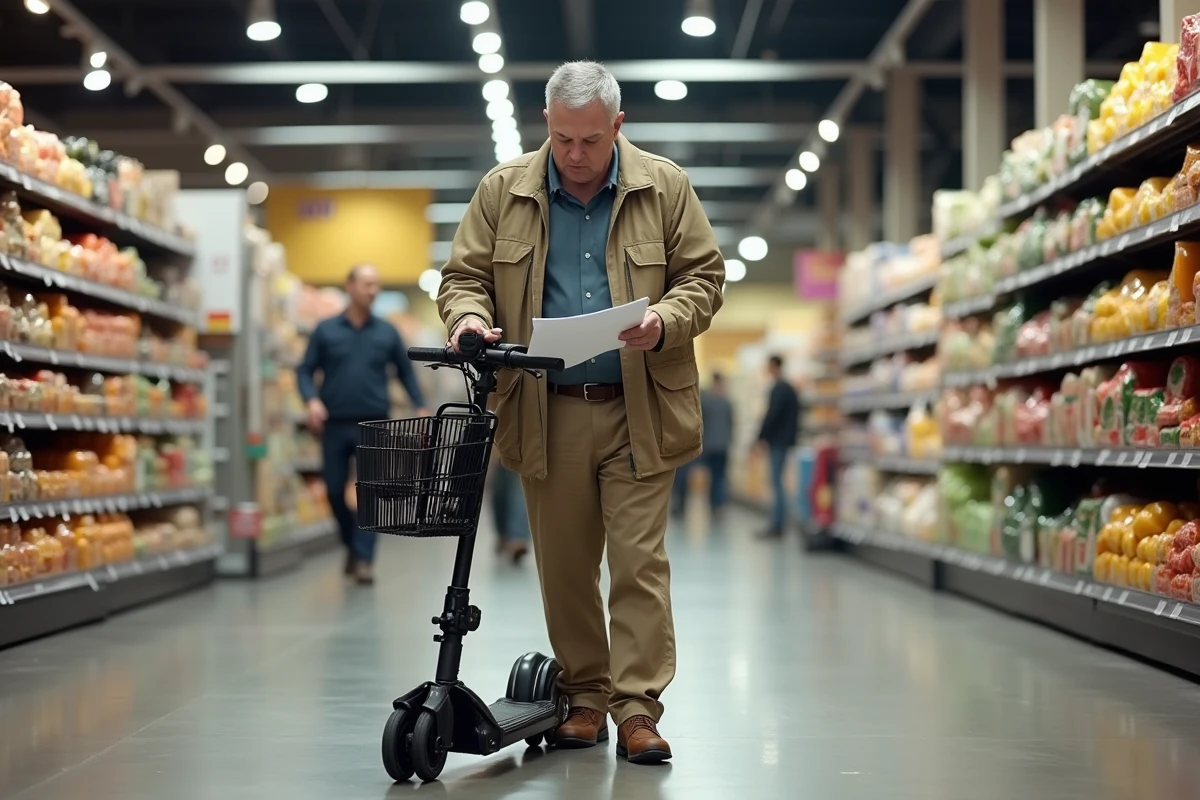
The management of parking is even more unclear. Few retailers offer a dedicated space, and the choice often boils down to improvisation: locking the scooter to a pole, asking for help at the reception, or trying to discreetly bring it folded into a cart. A perfect solution? It does not exist. Each retailer applies its own vision, depending on the available space and the tolerance (or mood) of its teams.
Storing and securing your scooter while shopping: solutions and practical advice
As you approach the doors, one concern arises: how to leave your two-wheeler without a headache? In the face of the risk of theft, it is better to pay attention to certain points.
Security starts with the location. Locking your scooter to a fixed and visible element, preferably in a monitored space or covered by cameras, limits theft attempts. A robust lock is worth the investment: a U-lock going through the frame and wheel will deter most thieves. Don’t forget to take removable accessories and batteries with you; nothing is too cautious in the hustle and bustle of a large store.
Sometimes, staff may agree to keep the device at the reception, always ask before heading into the aisles. If this service does not exist, opt for a folded scooter in a cart as long as it does not obstruct the flow of customers or the passage of items at the checkout.
To minimize any risk and ensure that the scooter remains where you left it, adopt these simple reflexes:
- Use a sturdy lock suitable for the scooter’s format
- Choose a well-visible and frequented location
- Take your removable accessories with you
- Ask at the reception about any solutions the store may offer
With the increasing number of EDPMs in the city, organizing to secure your equipment has now become an integral part of daily life. It is the condition for enjoying urban mobility without stress while respecting the framework imposed by each store.
Ultimately, crossing the threshold of a business with your scooter means navigating between freedom, vigilance, and constant adaptation. Habits change, uses too; one thing remains clear: each trip to the supermarket brings its share of adjustments for electric mobility enthusiasts.