
An offensive player equipped with an allround blade will slow down their progress despite intensive training. Conversely, a defender using a blade that is too fast will lose control and commit more direct faults. Some combinations of rubbers and blades, although popular, prove incompatible with certain playing styles or levels of experience.
The technical characteristics of a blade (weight, stiffness, ply composition, thickness) determine the trajectory, speed, and degree of control during each rally. Ignoring these parameters exposes players to unsuitable choices and a loss of efficiency in competition or training.
Why the choice of blade really influences your game
The table tennis blade is not just a simple support for the rubbers. It transmits intentions, reveals the player’s personality, and amplifies every nuance of the movement. Control, speed, precision: everything goes through this interface between your hand and the ball. To attack, a stiff and light blade paves the way for dynamic strikes, a rhythmic game, and aggressive returns. Conversely, a flexible or heavier blade favors feel, refines control over cut or placed balls, but reduces raw speed.
Every detail matters. Five, seven, sometimes nine plies: the structure of the blade modulates energy restitution at impact. A pure wood blade provides a natural touch, while the addition of carbon enhances responsiveness, sometimes at the cost of a loss of finesse in feel. The weight of the blade influences the fluidity of movements: light, it promotes initiative; heavier, it stabilizes defense and secures controlled topspins.
Choosing the right table tennis blade means aligning your goals with your technique. A club player looking to improve control will favor a balanced racket; an experienced competitor will select a specialized blade designed to support their style, whether offensive or defensive. Coaches remind us: to progress, one must harmonize the blade, the rubbers, and the movements. Experienced players do not hesitate to test, adjust, and refine. The racket then becomes an extension of the strategy, a true tool of expression at the table.
What criteria to consider to find the blade that suits you
To determine the table tennis blade that suits you, start by identifying your style: are you inclined towards attack, versatility, or defense? Attack requires a fast blade, often labeled OFF, OFF+, designed to unleash power with every hit. In contrast, defense relies on slower blades (DEF), synonymous with control and variety in spin.
The common thread is control. On the racket, this parameter depends on the type of wood, its stiffness, and the number of plies. Five plies offer maximum sensations, while seven plies prioritize stability and speed. The balance between control and speed shapes the DNA of your racket, as well as its compatibility with the chosen rubbers.
The weight of the blade plays a direct role in maneuverability. A light setup (around 80 g) facilitates quick transitions and encourages sudden attacks. Conversely, a heavier blade (up to 95 g) stabilizes defense, provides reassurance in blocking, and mitigates fatigue during long rallies. This often-overlooked criterion transforms feel and precision over the course of matches.
Do not underestimate the feel at impact. This sensation, intimate and unique to each player, depends on the wood, the handle (straight, concave, anatomical), and the combination with the rubbers. Experienced players confirm: a well-chosen racket fades into the background, allowing the movement to take center stage, making the game smoother and the style more defined.
What concrete advice to avoid mistakes when buying
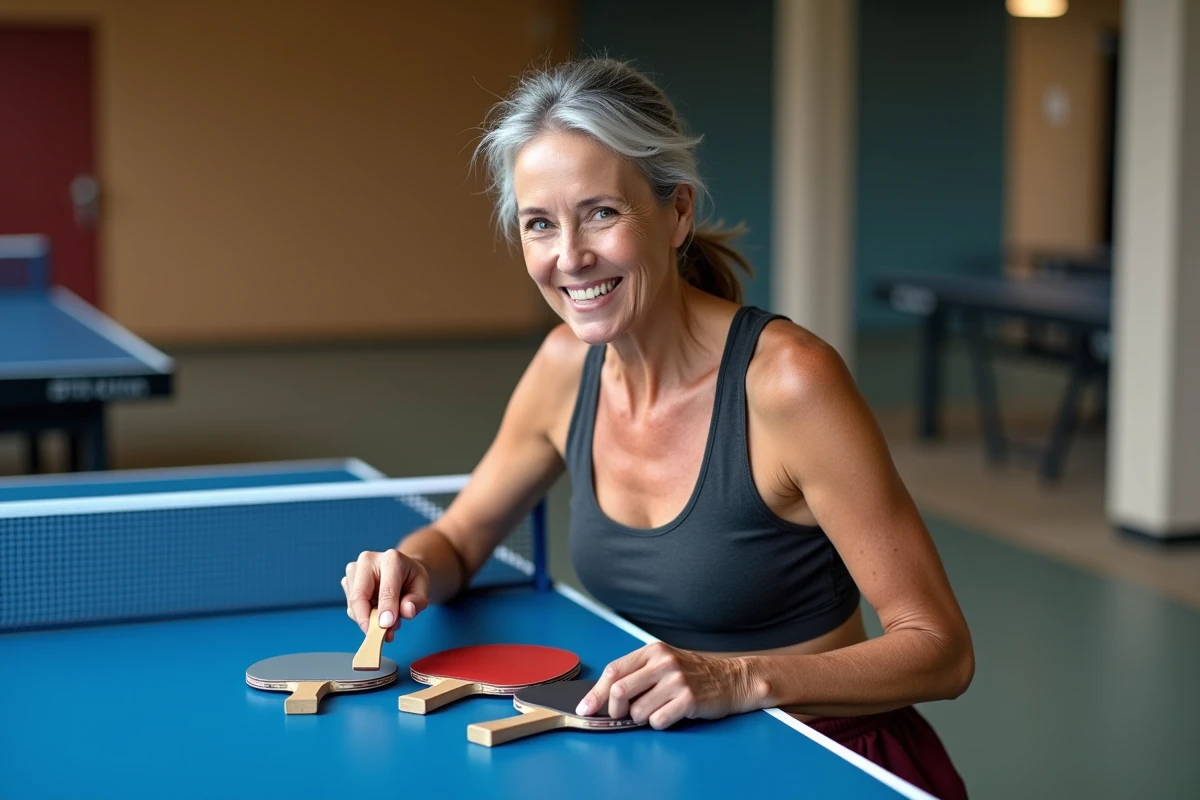
Before making your choice, it is wise to test different models of table tennis blades, varying weight and ply structures. The grip quickly gives an overview of the feel, and whether the contact meets your expectations. On dedicated platforms, consult not only the precise technical sheets but also feedback from other players who share your playing style. Cross-referencing experiences sharpens discernment and avoids many mistakes.
To maximize your purchase, here are some elements to gather from the start:
- Favor ITTF-approved blades to avoid any unpleasant surprises during official competitions
- Protect your equipment with a proper cover, which will extend the lifespan of the racket
- Acquire a quality net for home training
- Use appropriate balls to limit premature wear
Seek advice from a coach or an experienced player: an outside perspective, attentive to your game, can point out needs that may be unnoticed. For purchasing, prefer a reputable store with a wide selection and reliable customer service. The choice of blade goes beyond brand considerations: it engages the entire coherence of your equipment, a requirement that unites the large family of table tennis in France.
In the end, the ideal racket is not the one others use, but the one that allows you to imprint your rhythm on every rally, your style on every point. Knowing how to choose your blade is giving your game the chance to express itself all the way to the end of the handle.