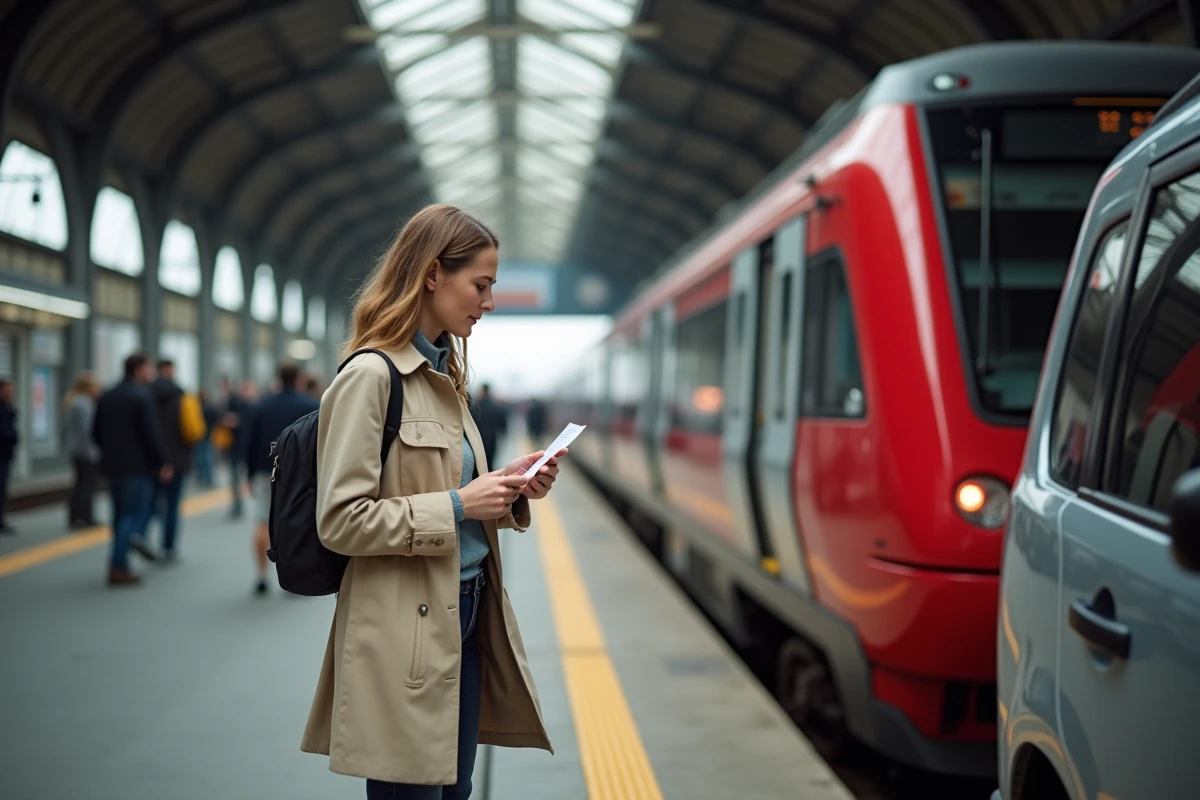
The auto-train service between Paris and Marseille has long allowed travelers to load their vehicle onto a wagon and retrieve it at their destination. SNCF has discontinued this historic service, which has since been replaced by specialized providers like Hiflow. The prices, conditions, and booking process have radically changed, making the comparison between the old model and current solutions particularly useful for budgeting.
Cost of vehicle transport Paris-Marseille: old auto-train versus current alternatives
The former SNCF Auto/Train service operated on a two-tier pricing model: the passenger ticket on one side, the vehicle transport on the other. The SNCF guide from 2015 listed price grids based on the vehicle category (car, motorcycle, two-wheeler) and the journey, with distinct rates for province/province and Paris/province.
Today, Hiflow is the official partner of SNCF for vehicle transport. The operation differs: the vehicle travels on a specialized truck, not on a rail wagon. The passenger books their own train ticket separately.
| Criterion | Old SNCF Auto/Train | Hiflow (current SNCF partner) |
|---|---|---|
| Vehicle transport mode | Rail wagon | Specialized truck by road |
| Passenger ticket included | No (to be booked separately) | No (to be booked separately) |
| Accepted vehicles | Cars, motorcycles, two-wheelers | Cars, motorcycles |
| Booking | SNCF counter or phone | Online via SNCF Connect or Hiflow |
| Availability time | Several hours after the train | Variable depending on the road journey |
To evaluate the price of the auto train Paris-Marseille, one must add the cost of Hiflow transport and that of the TGV or other train ticket. The total depends on the period, the size of the vehicle, and the booking lead time.
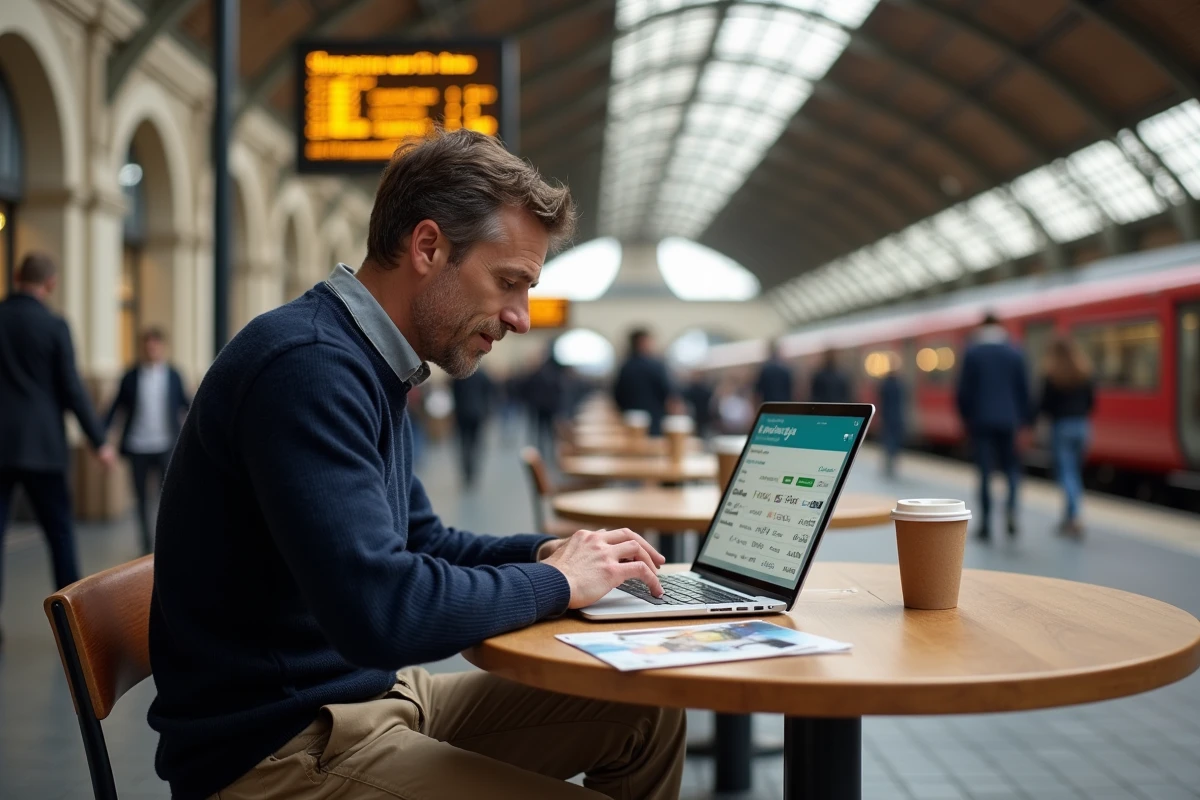
Hiflow and car transport by train: what changes for the traveler
The transition from SNCF auto-train to Hiflow alters several practical parameters that the pricing grids do not show.
Vehicle acceptance and technical criteria
The old Auto/Train service imposed strict criteria on the dimensions and weight of the vehicle. The SNCF guide detailed the acceptance steps: condition report at departure, fuel level check (tank at a maximum of one-quarter), removal of valuable items.
Hiflow applies its own acceptance criteria, which differ from the old SNCF specifications. Large SUVs or modified vehicles may pose issues. No recent official source specifies the impact of environmental standards (low emission zones, Crit’Air stickers) on vehicle acceptance by the service.
Logistics of delivery and pickup
With the old auto-train, the vehicle arrived at the station a few hours after the passenger. The service sometimes offered free shuttles between the passenger station and the auto-train terminal.
Hiflow operates differently: delivery is made to an address or meeting point, not necessarily at the station. The time between dropping off the vehicle at departure and picking it up at arrival may be longer than with the old rail system, as the truck takes the road.
Booking vehicle transport Paris-Marseille: steps and pitfalls to avoid
Booking goes through two channels: the SNCF Connect website (which redirects to Hiflow for the vehicle) or directly on the Hiflow site. The train ticket for the passenger is booked separately.
- Book vehicle transport several weeks in advance: capacity is limited, especially during the summer period on the Paris-Marseille route
- Check the dimensions and weight of the vehicle before confirming the order, as a refusal at the time of drop-off does not always entitle you to an immediate refund
- Compare the total cost (vehicle transport + train ticket) with car rental in Marseille or carpooling, as depending on the length of stay, the difference can be significant
- Keep the condition report documents provided at the vehicle drop-off for any future claims
A rarely mentioned point: the passenger ticket and vehicle transport are not contractually linked. If the train is canceled or delayed, the transport of the vehicle is not automatically modified, and vice versa. This dissociation requires managing two independent bookings with distinct exchange and refund conditions.

Overall budget Paris-Marseille: auto-train versus driving yourself
The question of pricing is not limited to the price displayed by Hiflow. For a Paris-Marseille journey, the cost of driving includes fuel, tolls, vehicle wear and tear, and driver fatigue over several hundred kilometers.
Transport via Hiflow eliminates fatigue and tolls but adds the cost of the train ticket. The economic relevance depends on the number of passengers: a solo traveler pays for one train ticket, while a family of four pays for four, which increases the overall cost compared to a car journey where everyone travels together.
For motorcycles, the calculation more easily favors specialized transport. Riding for several hours on the highway with a two-wheeler presents fatigue and weather constraints that truck transport eliminates.
The former SNCF auto-train service offered an integrated rail model that no longer exists in France. Travelers seeking this option must now go through Hiflow, compare quotes, and manually add up each expense item. The reflex to check the total cost rather than just the vehicle transport price remains the best protection against unpleasant budget surprises.