The thermal transmission of polycarbonate reaches up to 80% depending on the thickness and quality of the sheet. This characteristic exposes covered outdoor spaces to a rapid accumulation of heat, even in moderately sunny weather. Some manufacturers offer specific treatments to limit this effect, but these are rarely included by default.
The results obtained with traditional shading devices vary greatly depending on their location and nature. The evolution of bioclimatic models has allowed for better levels of regulation, without the need to add energy-consuming equipment.
Why does heat accumulate under a polycarbonate pergola?
Polycarbonate fascinates with its lightness and robustness, making it a preferred choice for contemporary pergola roofs. However, its transparency, an asset for light, quickly turns against the user when the sun shines brightly: heat seeps in, the air becomes heavy, and the covered space turns into a true sauna. Under the effect of radiation, the temperature rises sharply, especially if the air does not circulate.
The slightest flaw in ventilation amplifies the problem. A structure that is too closed retains warm air, and the feeling of suffocation sets in. UV-treated polycarbonate sheets do limit some of the radiation, but they do not prevent the thermometer from rising, especially during periods of sustained heat. When the roof allows light to filter through without a filter, the phenomenon accelerates. As for opaque versions, they reduce brightness but do not eliminate overheating.
To keep the space pleasant, one must juggle several factors: the position of the pergola relative to the sun, the thickness and quality of the sheets, as well as ventilation devices or the presence of plants nearby. These parameters are no longer secondary: they have become essential considerations for anyone looking to enjoy their outdoor space without fearing heat waves. As heat waves multiply, thermal comfort under a pergola has become a shared concern. Finding the balance between light, solar protection, and insulation becomes the real challenge when relying on polycarbonate. Tips for reducing heat under a pergola are now part of all landscaping projects.
What solutions are there to enjoy a cool space even in the height of summer?
To transform a polycarbonate pergola into a truly pleasant shaded corner, there is no miracle recipe, but a series of options that, when combined, make all the difference. The main idea: invest in the right equipment, suited to the structure and environment.
Solar films applied to the sheets are an effective first line of defense: they filter UV rays and limit overheating, without plunging the space into darkness. Another appreciated solution is thermal blinds or curtains installed on the underside, which add an extra barrier against direct radiation while remaining discreet and easy to remove if needed.
For those seeking a more pronounced effect, insulating panels, particularly the sandwich model, prove to be remarkably effective. Their multilayer structure protects against heat in summer and cold in winter. A quick alternative? Reflective solar paint, which improves light reflection on the roof and significantly reduces the greenhouse effect.
Create shade and promote air circulation
Several complementary solutions allow for modulation of shade while promoting ventilation:
- Climbing vegetation, guided on the structure, acts as a natural air conditioner and lowers the temperature by a few precious degrees.
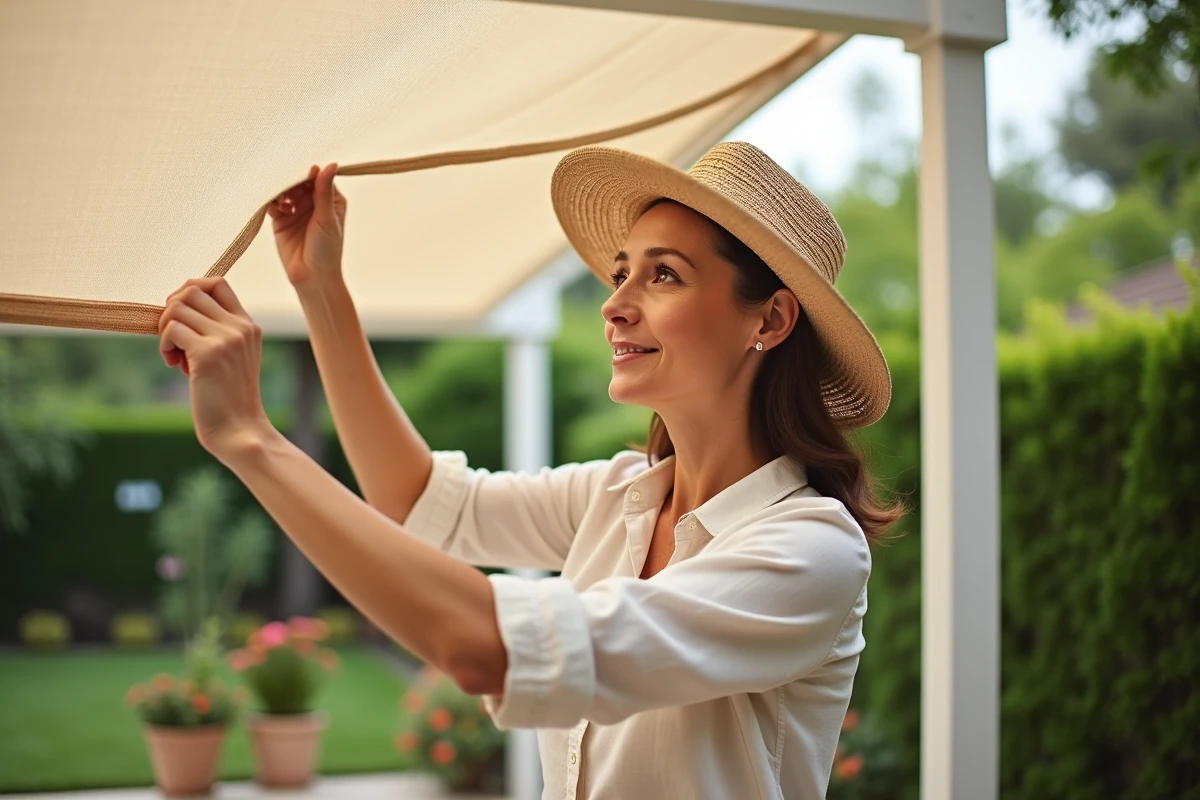
- Installing reed screens or micro-perforated fabrics above or on the sides filters sunlight and heat while allowing air to pass through.
- Mobile side walls protect against low-angled rays and adjust according to the sun’s position, without partitioning the space.
Nothing replaces natural ventilation: opening the sides whenever possible, letting the air circulate, is the guarantee of quickly evacuating stored heat. By combining these different solutions, everyone can find appreciable comfort under the pergola, even when the weather gets heated.
Focus on the bioclimatic pergola: a modern alternative for optimal comfort
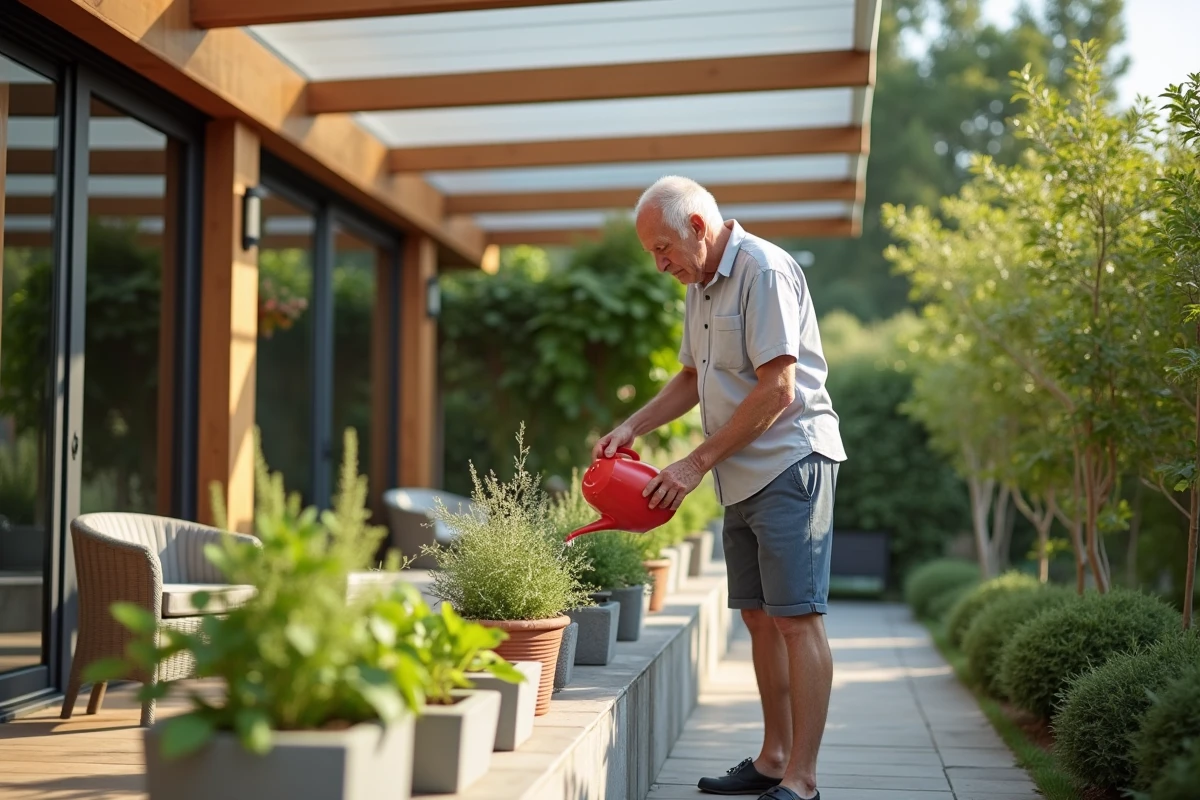
The arrival of the bioclimatic pergola has changed the game. Thanks to its adjustable slats, it offers unprecedented control over heat and light. One can modulate shade in real-time, let air flow as soon as heat rises, or close everything up to face the rain.
This principle relies on intelligent ventilation management: by simply opening the slats, air circulates, overheating recedes, and the atmosphere remains pleasant even when the mercury rises. No more DIY or energy-consuming additions: it’s enough to adjust the opening of the slats throughout the day to maintain freshness.
Some models go further by integrating insulating or sandwich panels, which limit both thermal transmission and noise disturbances. This technical choice is favored by those who want to enjoy their pergola all year round, without fearing either heatwaves or the first frosts. All this without sacrificing the aesthetic aspect of the structure.
The bioclimatic pergola represents the synthesis of modularity and adaptation to climatic constraints. It fits into a logic of sustainable comfort, where every detail counts to transform the terrace into a true living space, regardless of temperature variations. Gaining this flexibility means choosing not to endure the weather but to tame it, simply.