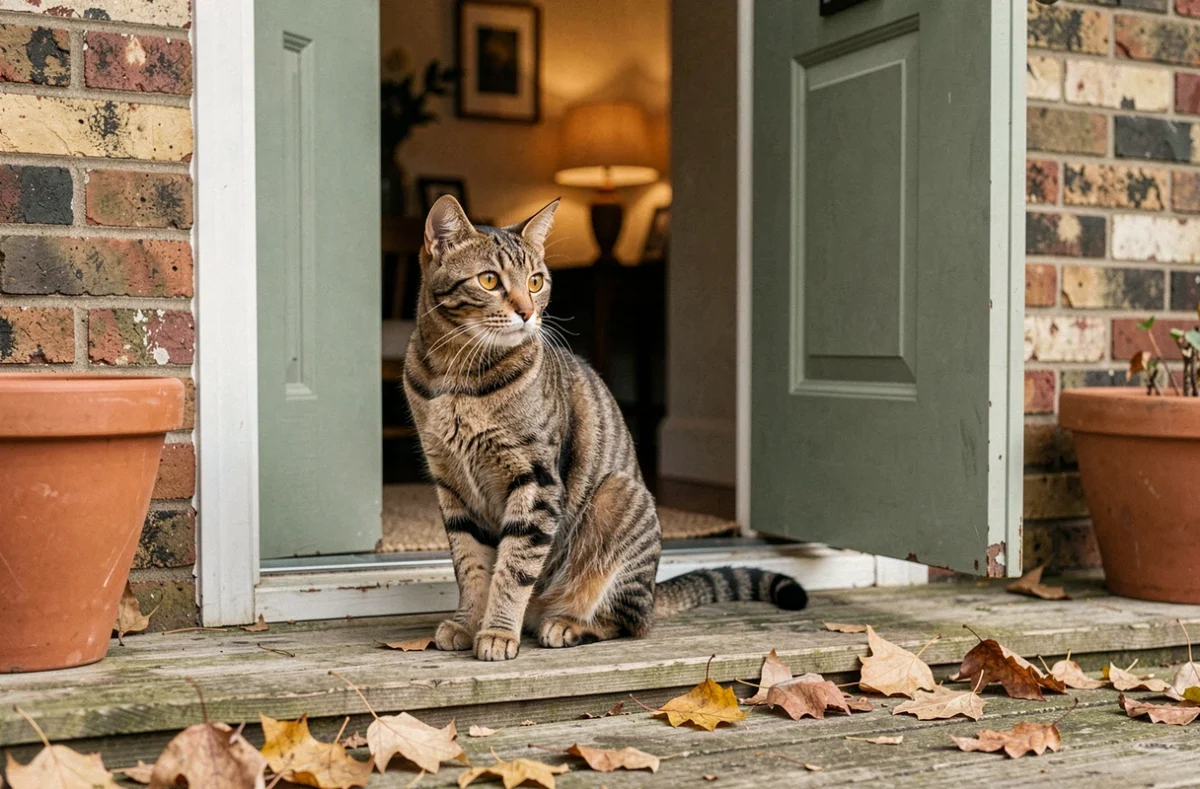
When an unknown cat shows up at your door or in your garden, the first question rarely concerns symbolism. It focuses on the animal’s status: is it lost, abandoned, or simply wandering in a territory larger than that of its owner? The answer determines everything you can (and must) do next. Understanding the visit of an unknown cat to your home requires distinguishing between several scenarios, each governed by specific rules.
Legal status of the visiting cat: lost, stray, or abandoned
The confusion between these three categories is common, and it leads to mistakes. A cat crossing your garden is not necessarily without an owner. Before making any decisions, French law requires following specific steps.
| Status | Definition | Competent contact | Legal deadline for the owner |
|---|---|---|---|
| Lost cat (identified) | Animal microchipped or tattooed whose owner can be reached via I-CAD | Veterinarian, then direct contact with the owner | Quick return after reading the chip |
| Stray cat (unidentified) | Animal without a visible chip or tattoo, status unknown | Town hall, then municipal pound | Eight working days in the pound before abandonment procedure |
| Abandoned cat | Animal whose owner has been identified but does not come forward within the allotted time | Pound, then association or shelter | Adoption possible after the deadline expires |
This table summarizes the most common cases. The central point: the pound is the legally competent contact for a stray animal. An individual should not decide alone to keep a cat whose status is unknown.
If you have already observed an unknown cat visiting me repeatedly, the approach remains the same: first check if it is identified before considering anything else.
Identification by microchip: what has changed since 2024
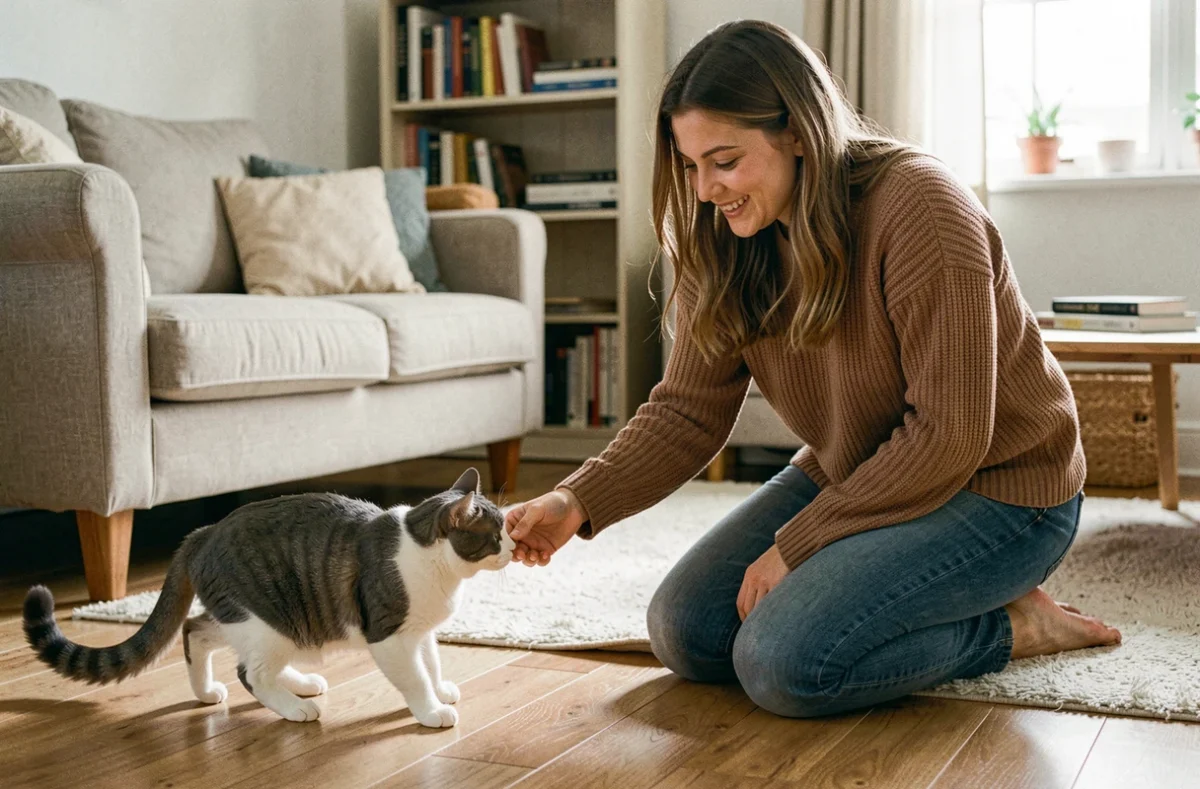
Reading a microchip at a veterinarian takes a few seconds. However, the next steps of the procedure depend entirely on the update of contact details in the national I-CAD database.
Since January 2024, I-CAD no longer systematically sends identification cards by mail. The holder consults and downloads their documents from their online space. This change has a direct consequence: an owner who has moved without updating their address in I-CAD becomes unreachable, even if their cat is microchipped.
According to data relayed by veterinarians, keeping contact details updated in I-CAD significantly increases the chances of finding a lost animal. The national database remains the pivot of any return, but it only works if the information is current.
- The chip alone is not enough: the associated contact details must match the owner’s current address and phone number
- An unidentified cat is not automatically abandoned; it must be reported to the town hall or the pound, which indicates the next steps
- Tattooing (ear or inner thigh) remains a valid means of identification, but it is rarer than microchipping
Behavior of the unknown cat: what its attitude reveals about its situation
A cat rubbing against your legs and purring does not send the same signal as a cat huddled under a hedge. Observing behavior before acting allows you to tailor your response.
A relaxed feline exploring your terrace without signs of stress is likely a neighborhood cat on a territorial excursion. The cat is a territorial animal whose range often exceeds the boundaries of a single garden. Its presence at your home may simply mean that your yard is part of its usual route.
A thin cat with a dull coat that meows insistently at your door shows signs consistent with a lost or struggling animal. In this case, securing it in a closed space (transport cage, locked room) before contacting a veterinarian is the first reasonable measure.
A fearful cat that flees at the slightest movement is more difficult to approach. Trying to catch it may stress it further. Reporting its presence to the town hall or a local association remains the best option for a professional to intervene with the appropriate equipment.
Feeding a visiting cat: the concrete consequences
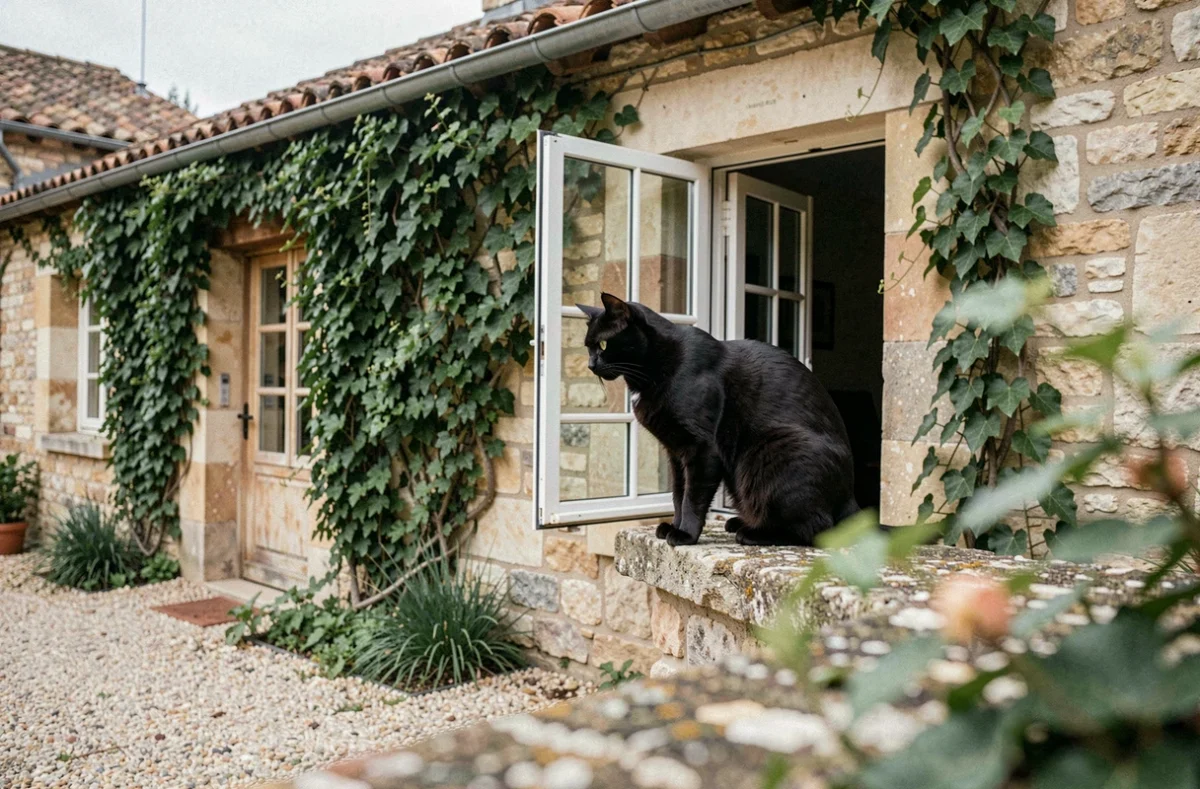
The temptation to put a bowl outside is strong. This decision is not trivial. By regularly feeding a cat that belongs to a neighbor, you risk diverting the animal from its home. Some cats simply follow the most accessible food source.
Regularly feeding a stray cat can be interpreted as an act of possession. If the animal is claimed by its owner, the situation can become legally uncomfortable. Foster families themselves, when acting within an association, sign a contract that specifies the conditions of care and return.
In practice, offering water and a small amount of food to a visibly hungry animal is common sense. But turning this occasional help into a daily habit without checking the cat’s status poses a real problem.
- Check first if the cat is identified before feeding it regularly
- If no owner comes forward, contact the pound rather than keeping the animal at your home
- A cat fed by several households can develop weight problems without anyone noticing
Meaning of a cat’s visit: between territory and opportunism
The presence of an unknown cat at your home does not have a verifiable mystical significance. However, it has documented behavioral explanations. Cats explore, hunt, and seek resources over a much larger area than their home.
Your garden may attract a feline for simple reasons: presence of rodents, sheltered area from the wind, warm soil in summer, or absence of a resident cat defending the territory. A garden without a resident cat is free territory, and neighborhood felines quickly notice it.
The recurrence of visits often indicates that the cat has incorporated your space into its territorial routine. This is neither a sign of distress nor a particular message: it is the normal functioning of an animal whose territory covers several properties.
The most useful reflex when faced with a regular visiting cat remains to check its identification and inform the neighborhood. In most cases, the owner lives just a few streets away and is unaware that their cat spends its afternoons at your place.