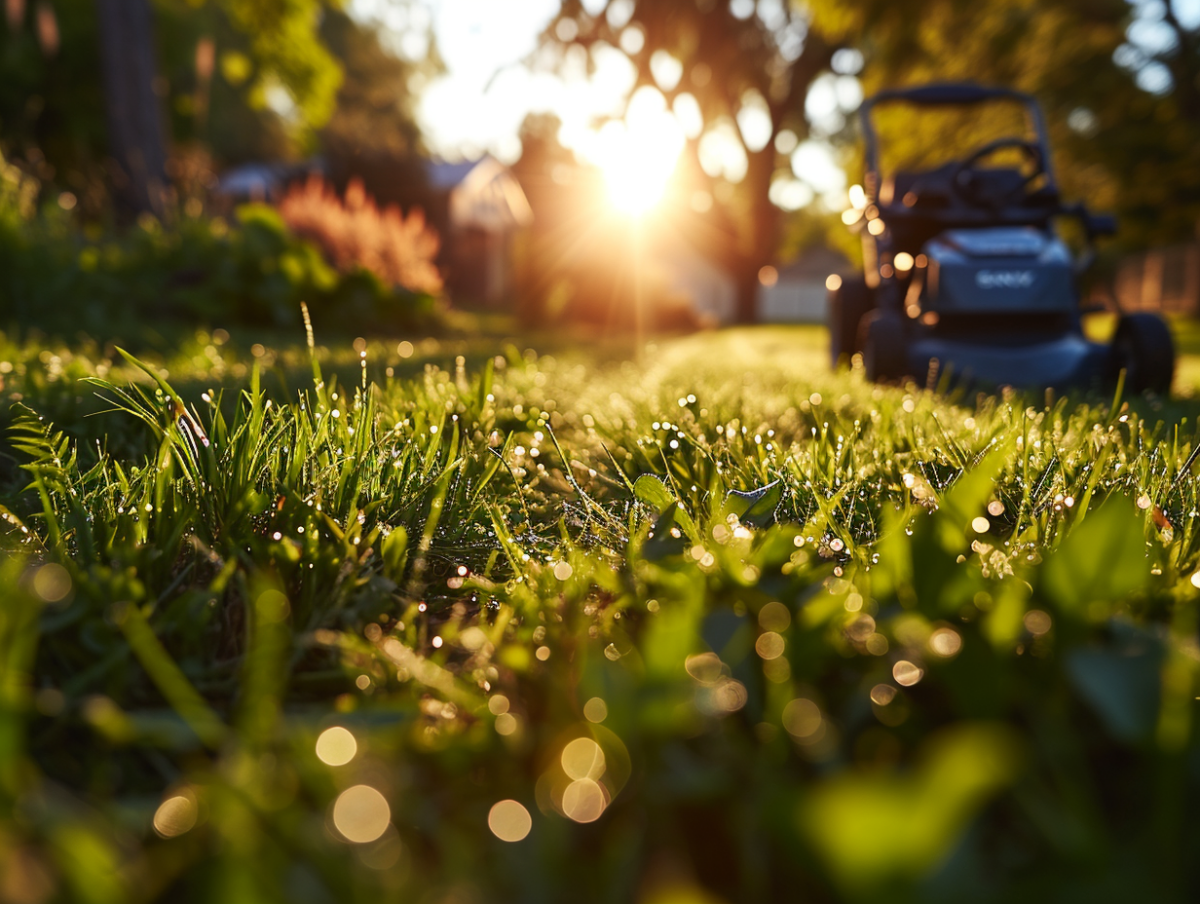
Reaching the ideal lawn height is an art that combines knowledge and precision. The perfect cut depends on several factors, including the type of grass, the season, and the use of the area. An appropriate length promotes a dense and healthy lawn, reducing weeds and the need for watering. An optimal height allows for better resistance to weather conditions and outdoor activities. With the right tools and techniques, maintaining your lawn at its ideal height becomes an achievable task, ensuring an aesthetic and sustainable green space.
The criteria determining the ideal lawn height
In an era where attention to detail has become a mantra for green enthusiasts, mowing height stands out as a decisive factor for the health and aesthetics of your lawn. The golden rule, determined by grass species, suggests an ideal cutting height ranging from 3 to 5 cm for fine grasses and can reach 7-8 cm for hardier varieties. This precision ensures not only a visually harmonious lawn but also preserves its vigor throughout the seasons.
Contemporary gardening advice highlights the intrinsic relationship between lawn mowing and lawn health. A well-adjusted cutting height positively influences leaf density, disease prevention, and the lawn’s ability to cope with climatic fluctuations. Proper mowing promotes biodiversity, inviting a variety of beneficial insects that contribute to the ecological balance of the garden.
Experienced gardeners know that mowing mistakes can severely harm the lawn. Cutting too short exposes the roots to sunlight, threatening the plant with drought and burning, while uneven mowing can lead to uneven growth and weed proliferation. These mistakes compromise your lawn’s resilience and its ability to regenerate.
For precise and effective mowing, tools play a key role. The key features of thermal mowers, such as sharp blades and a mulching system, contribute to a uniform cut while recycling the cut grass as natural fertilizer. Lawn maintenance becomes both an aesthetic and ecological gesture, enhancing the vitality of your green space.
Techniques and tools for a perfect lawn cut
Mowing techniques play a crucial role in the health and appearance of your lawn. Adjust the mowing frequency to the growth of your grass, keeping in mind that each pass of the mower stimulates the density and robustness of the grasses. A regular mowing, typically weekly in spring and summer, contributes to a uniform and dense green carpet. Consider the first mowing of the year, often decisive: perform it when the grass growth justifies it, without rushing, to avoid stressing the young shoots.
Using the appropriate mowing tools is essential. A well-sharpened mower ensures a clean and precise cut, preventing the tearing of grass blades, which would make them more susceptible to diseases. Mowers equipped with a mulching system are particularly effective: they finely chop the cut grass and redistribute it on the lawn, providing natural fertilizer and reducing the need for watering. Remember that the regularity of maintenance and the good condition of the tools are two key factors for successful mowing.
Do not overlook the finishing touches. For edges and corners where the mower cannot reach, string trimmers, with or without line, allow for clean and tidy contours. These details, although subtle, distinguish a professionally maintained lawn from one that has simply been mowed. The mowing technique and the choice of tools intertwine to create visual harmony and ensure the longevity of your lawn.